
Artwork Meanings
Hope
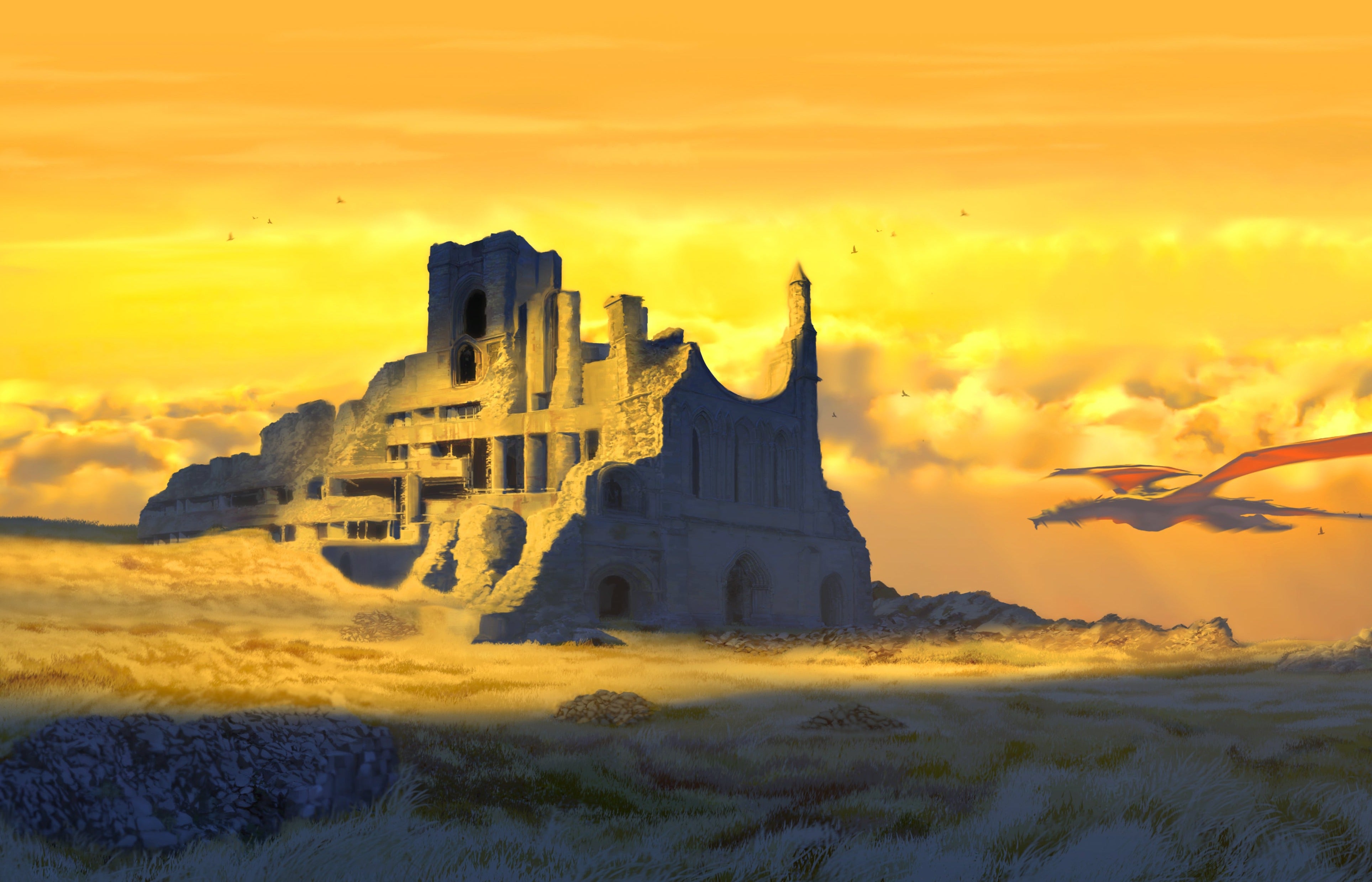
At first glance, a castle ruin dominates the horizon. An evocative fusion of medieval gothic silhouettes and stark contemporary brutalism. The contrast lends the scene a sense of timelessness, as though past and future have eroded into one.
On the second read, a dragon emerges from the right side, its presence subtle yet transformative. What begins as a serene, almost architectural meditation unfolds into a realm of
For collectors who appreciate artwork that rewards curiosity and rewards the viewer with unfolding narrative depth.
The Fall
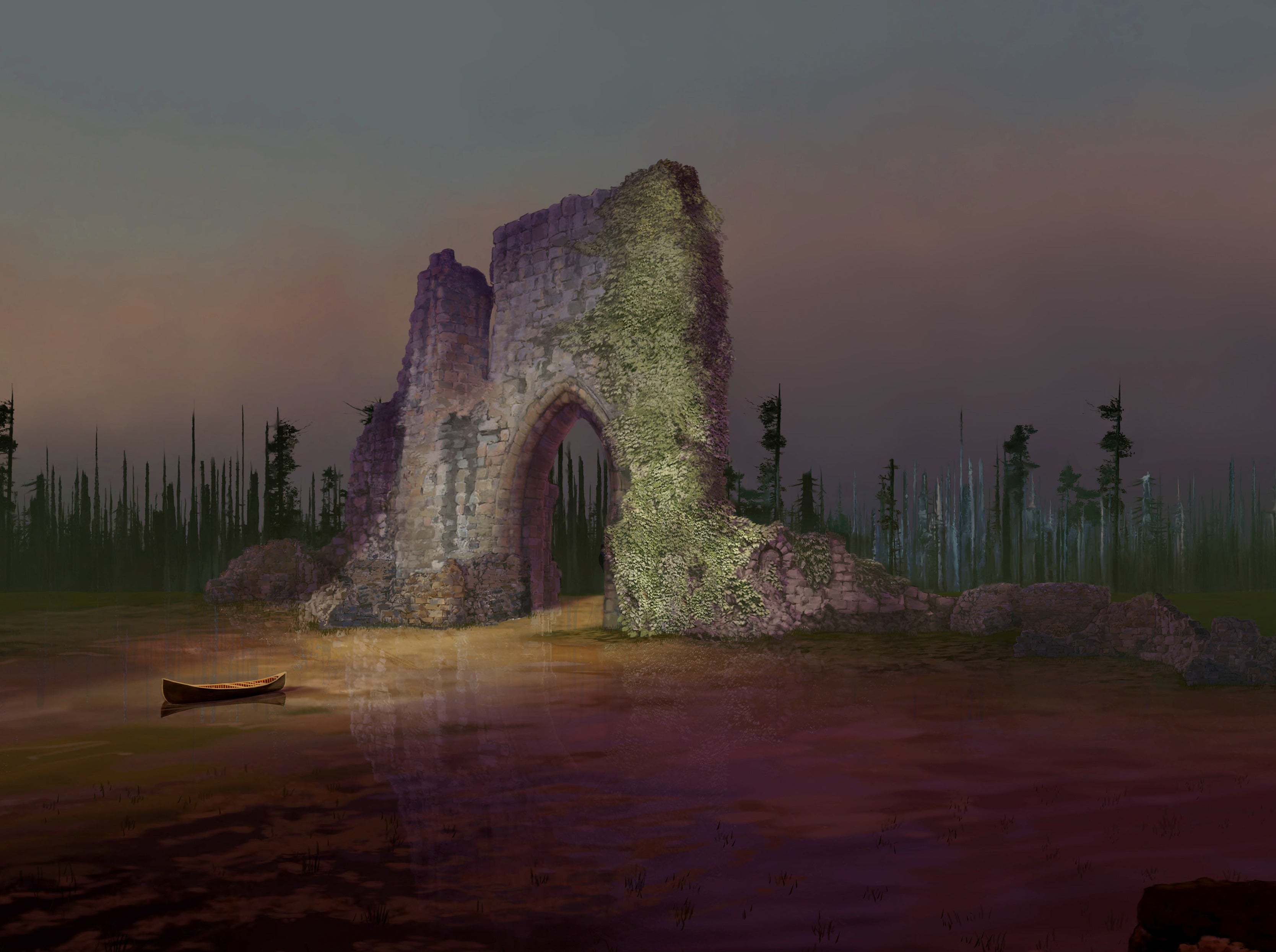
This desolate scene, with burned trees in the background, seems to portray despair. However, the lone embarcation in the water suggests an exploration. The soft light guiding visitors through the archway. The canoe is empty, and the water is still. Where has the traveller gone?
This artwork is about the journey to self-discovery. Often, going deep into oneself means facing the darkest parts of ourselves. The parts we wish to ignore. The parts that disgust us. These parts are often the ones that tie us to the worst versions of ourselves. Until we face them, we may not be free of them.
The path to growth is one that we must take alone, into the depths of ourselves. The lake in the image represents those depths, and to accentuate that metaphor, we cannot see where the path through the archway leads. The canoe has place for one traveller only. The water at the front is shallow and we can see the murky bottom suggesting years of undisturbed accumulation.
The soft light guides the way, and nothing in the scene suggests that one may not turn back. The burnt trees at the back stand as a good omen. When a forest burns, it actually lays down the nutrients for a new, healthy forest to regrow from its ashes.
Shattered
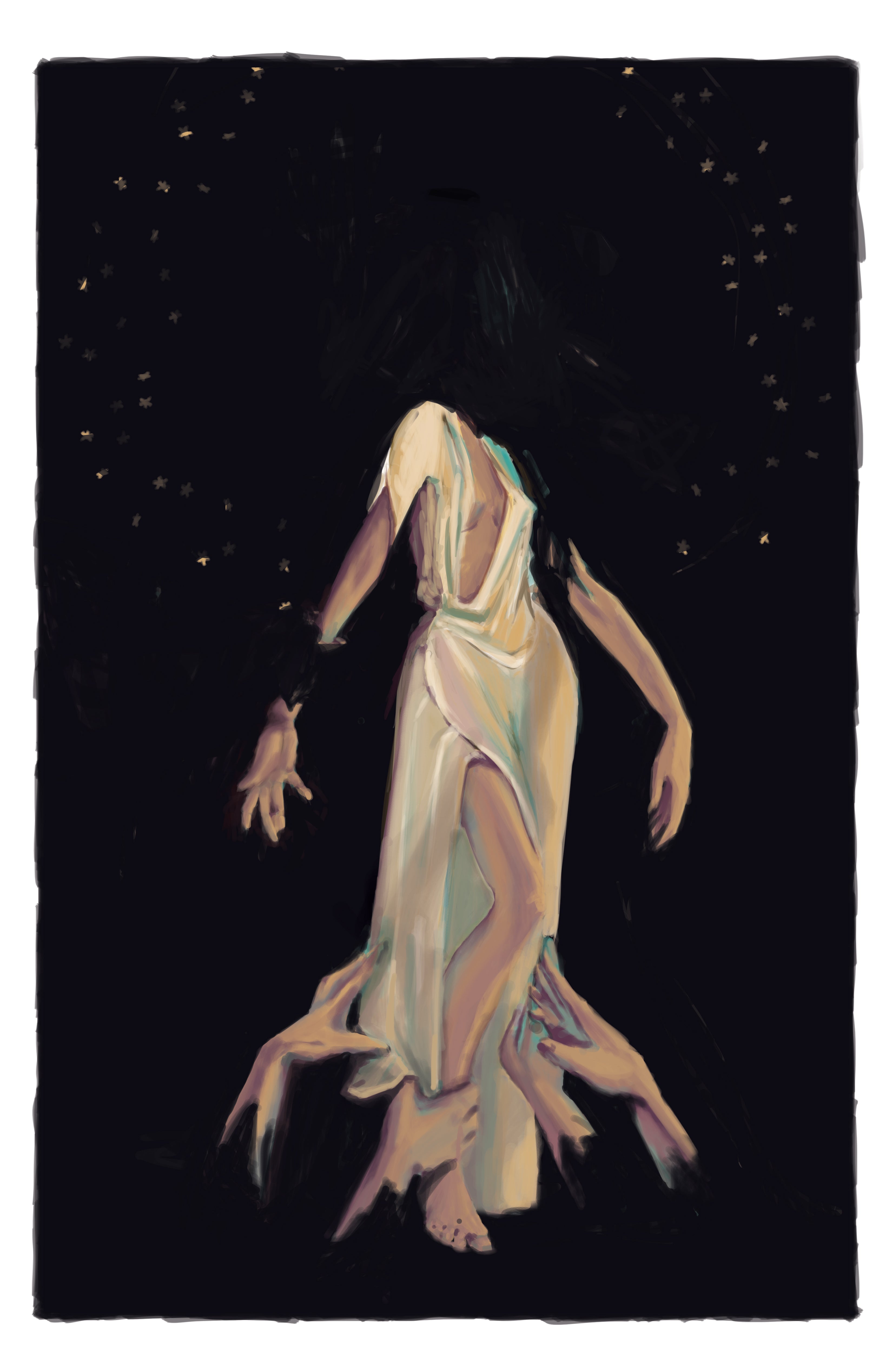
Shattered is an artwork about the weight of people’s expectations, specifically on women. The figure draped in a white robe is shattered in an undefined black space. Her head, absent from the image conveys anonymity, implies that this sentiment is shared by many. At the bottom of the image, prying hands pull at the figure dragging her down. These hands represent the constant demands made on a person; expectations from strangers. The artwork as a whole is imbued by the feeling of heaviness. Its disconcerting effect is a product of the mirroring we feel when we see this image. Each of us knows all too well the weight of other’s, and society’s, expectations.
A subtle halo of stars is depicted around the space where the figure’s head ought to be. This halo suggests that even in the darkest times, we should not give in to hopelessness, as there are constellations of reasons to keep going.
Neo India
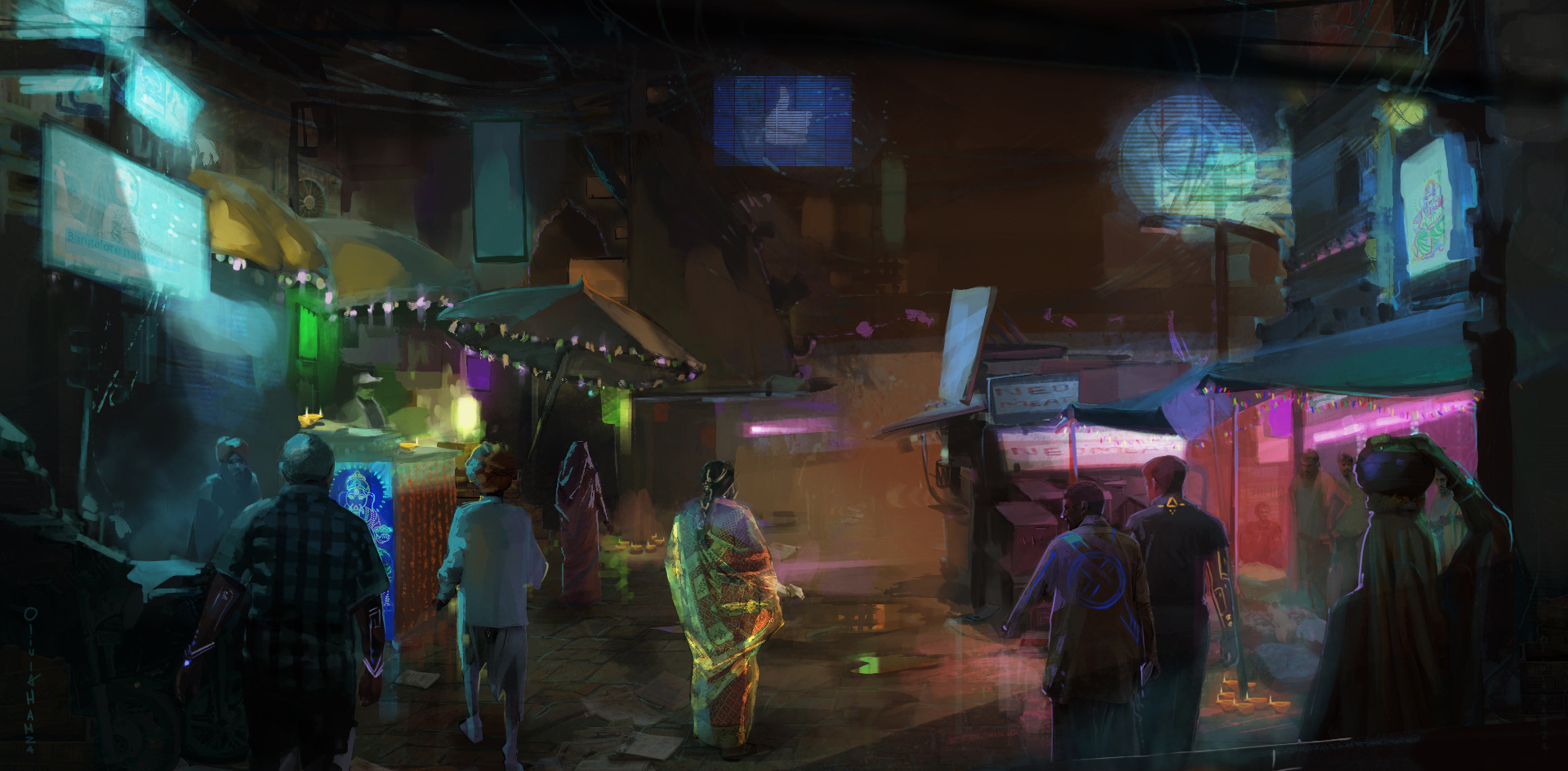
A comment on both manufacturing of consent and the homogenization of cultures, Neo India draws you in with its brightly coloured neon lights. Originally an exploration of the cyberpunk genre set in Bangalore, India, the artwork grew to develop added meaning as I fleshed out its detail.
The Bangalore region lends itself wonderfully to the artistic genre because of India’s bazaars and its traditional embrace of color. India is also a technologically forward society although global media representation often chooses to ignore that.
The comment on homogenization of culture and the manufacturing of consent come from the same elements; the holographic elements. Both represent massive companies that are currently under scrutiny for their aggressive and invasive business practices. They are often called out as performing digital colonialism. This is a message I chose to set in India, as they’ve successfully pushed back one colonial power in the past and remain an example for us all in the future.
The holograms show the insidious nature of the expansion strategies of these businesses. They are not physically there, however they are omnipresent. One cannot escape dealing with them. The meta “Like” button suggests a kind of coerced appreciation of the product. Seeing the suggestion that you like something every day, you may finally begin to believe it.
The coexistence of the local culture and rites, with the mega corporations’ marketing strategies suggests the importance of preserving local, individual, organic culture amidst the concept of a global-culture.
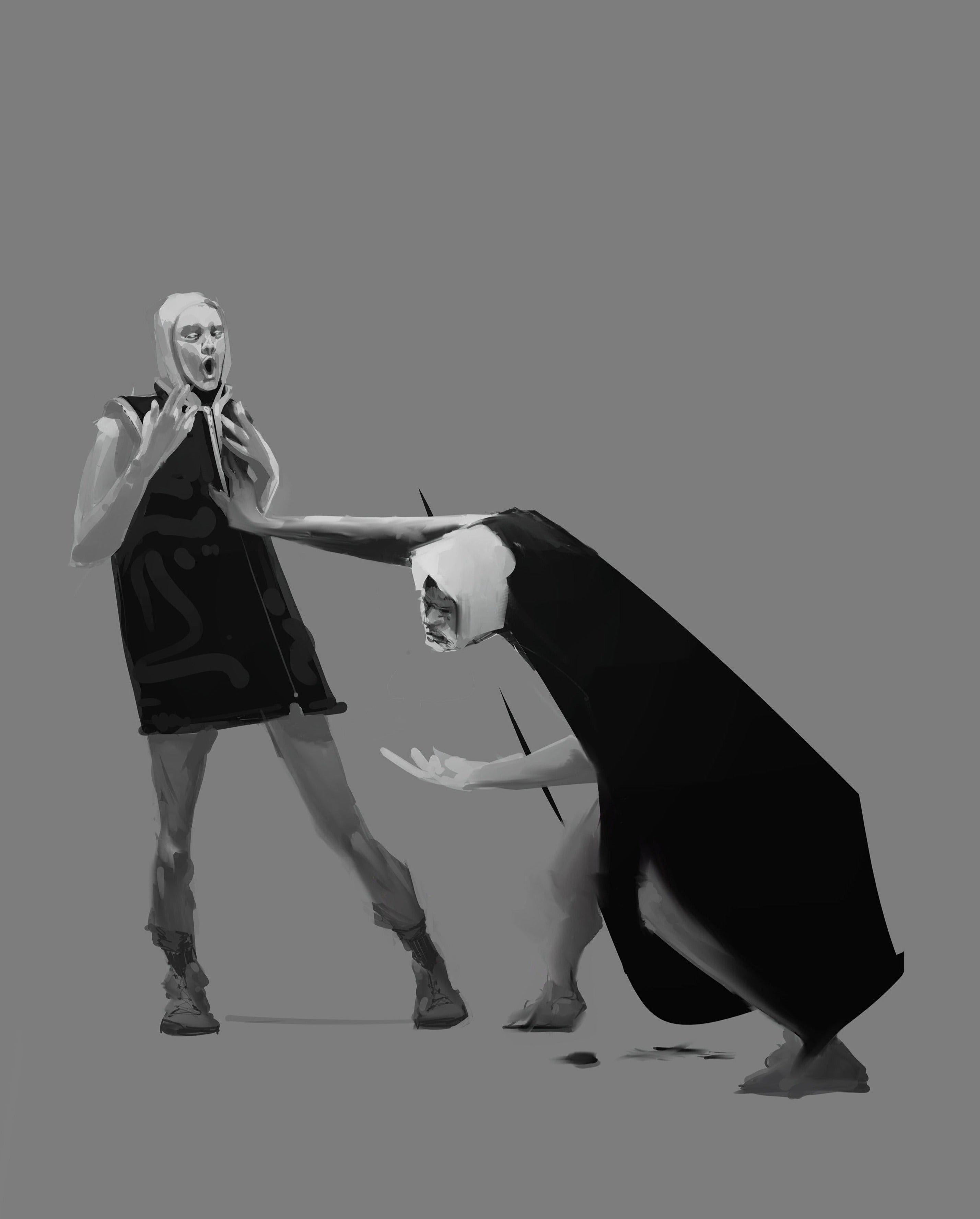
Metric
Metric is an exploration of misinterpretation. It suggests no fixed narrative, yet many questions: Are the two figures strangers? Is one in need of help? Are those emotions horror, concern, disgust or surprise? Is the touch a plea for help or a violation?
Ambiguity is the heart of the work.
In this artwork emotion shifts and reshapes the story with each viewing, inviting endless reinterpretation. The work reflects how we often misread one another in the cadence of daily life. In crowded cities, amid relentless encounters, perception can harden into assumption. Our lives unfold in a continual negotiation of meaning. Communication, though our most valuable asset, is rarely mastered.
The way we receive an interaction isn’t necessarily a hard truth about what happened. Metric highlights this, as depending on which character’s emotions you read, the artwork takes on a new meaning. Attend first to the older man’s expression, and the scene resonates with empathy. Attend instead to the younger figure, and the atmosphere tightens with threat.
The piece suggests that meaning is never singular; it is shaped by the gaze that meets
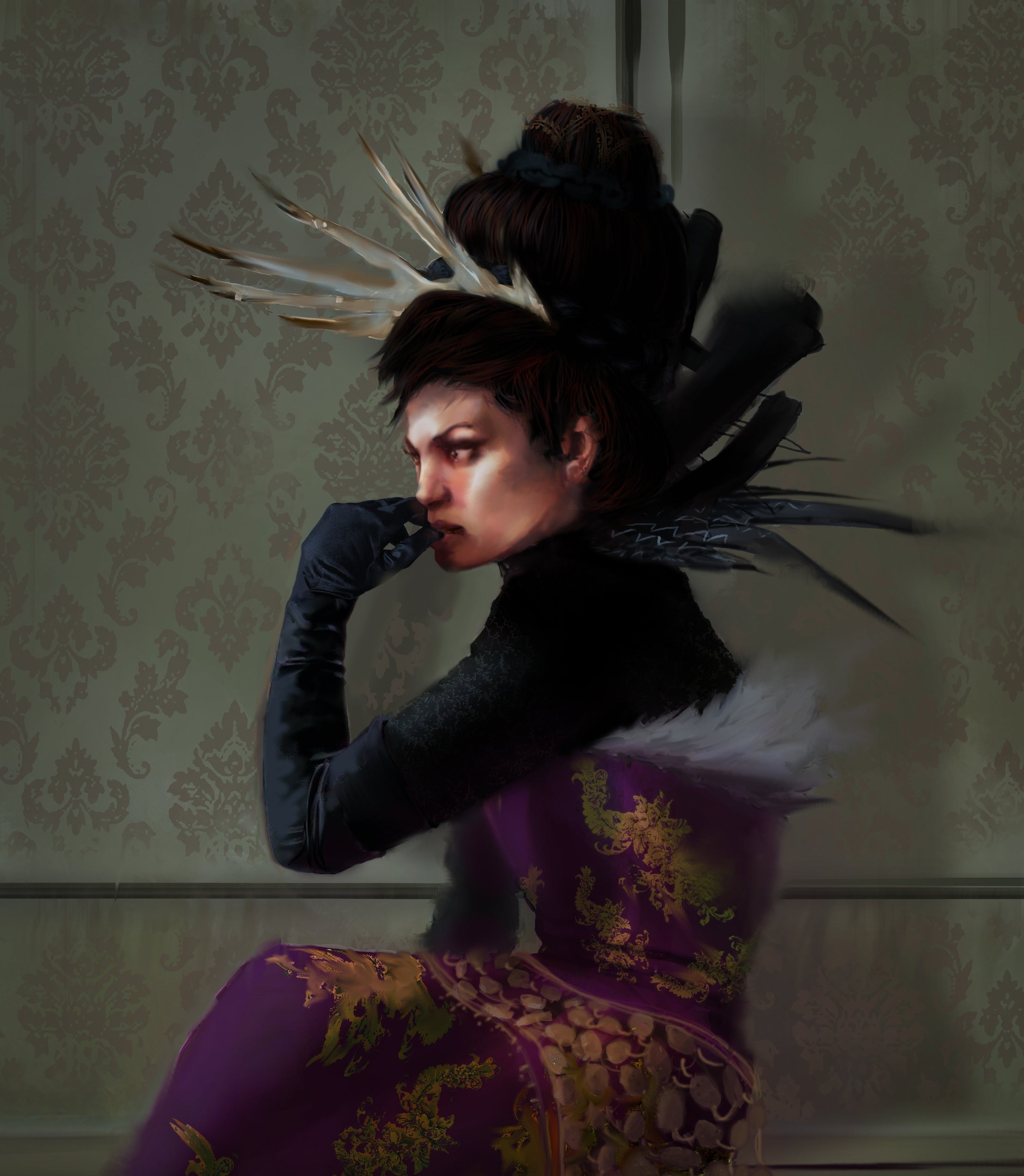
Queen
This piece speaks to the weight of responsibility. We see a woman in a position of power, evident in her clothing. She is lost in thought, and her face conveys concentration, determination, and a hint of anxiety. She weighs her options and is aware of the stakes. In this scene, the light comes from the left, in the direction she is facing. She is looking outside her castle, perhaps at an approaching army. The framing is somewhat claustrophobic, suggesting she may be trapped or have few options. The scene reflects her isolation. However, she still exudes a triumphant strength. Therefore, it is also a work about resilience and the virtue of facing adversity.
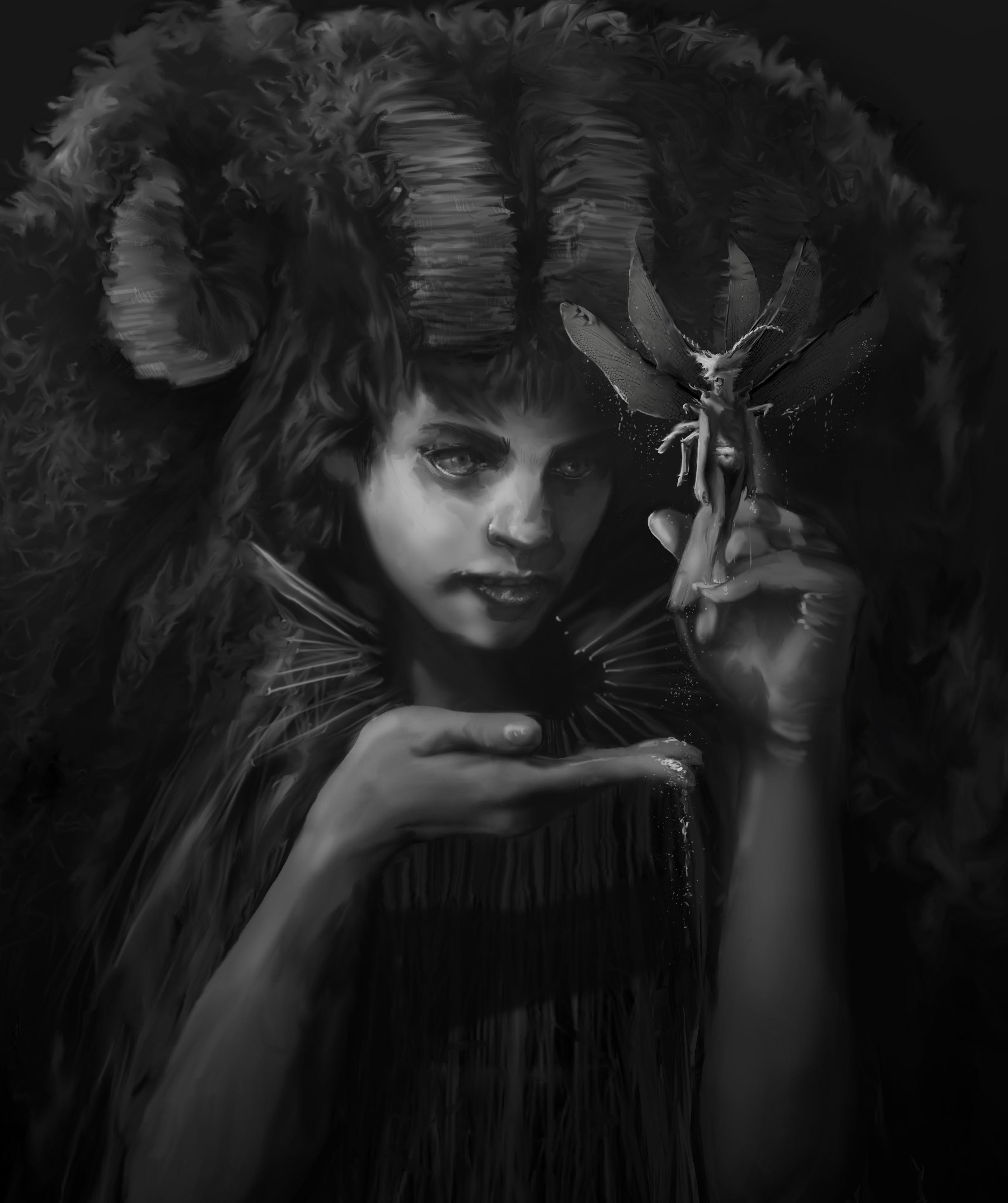
Heretic
Heretic explores the peril of surrendering to deceptive beauty. Drawing on the folklore tradition in which faeries are beguiling and morally ambiguous, the work centers on a fawn-like figure who has been disarmed by the fairy’s apparent innocence. Her posture suggests complete trust; an openness that renders her vulnerable. That vulnerability is the emotional core of the piece. It is tender, intimate, and tragic.
The fairy exudes a charm that extends beyond the fawn to the viewer. We too are invited to believe in her softness, even as subtle cues hint at mischief beneath the surface. In this way, the artwork implicates us in the same act of blind faith.

Image with text
Witch’s House is a piece on isolation, exile, and self-reliance. The witch’s house stands solitary, reading as both a sanctuary and prison. It is ambiguous whether the inhabitant has chosen this seclusion or whether the house is a place of confinement. If it is a chosen space, then the crosses surrounding the house act as protective amulets. However if this construction acts as a prison, then they are erected to contain rather than shield. This ambiguity forms the emotional dissonance of the work. The upright cross atop the house and the inverted cross upon the door mirror one another. They symbolize the divide between inner truth and outer judgment. Protection and persecution become visually indistinguishable.
The piece reflects on identity. It questions who we are to ourselves, and who we become in the eyes of others. To follow one’s own path may invite conflict, estrangement, even danger. Is safety worth the cost of self-erasure? If we suppress our nature to appease the world, are we truly living?
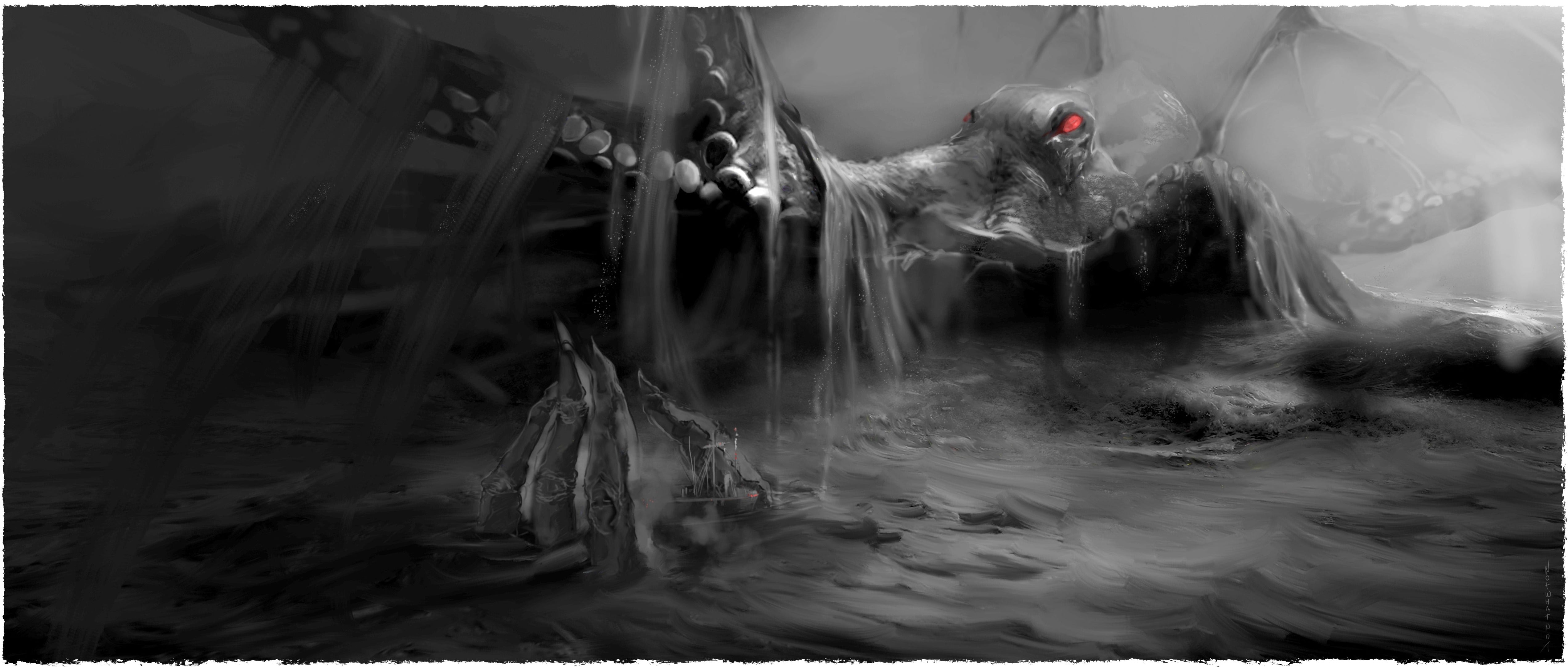
Cthulhu
The Cthulhu piece is a homage to H.P. Lovecraft’s storytelling. Granted, certain aspects of his work have aged terribly. However, I find there’s a niche parallel to be drawn between his literary works and the emergence of Kaiju in Japanese pop culture as of the 1950s onward. The introduction of cosmic horror and existential dread are definitely themes that Lovecraft championed in his works. The concept of incomprehensible entities which is a central theme in my work was also something brought about by lovecraft.
The idea here is that the chaos and messiness of life can be attributed to massive forces completely out of our control. These forces are moved by a set of rules which are not within the grasp of the human mind. In real life these forces may represent global movements, economic & political power, or even natural disasters. We often assume that a political party, or a company moves forward with a clear plan in perfect cohesion. However, we tend to forget that these coordinated attempts are enacted by individual people who are messy, have blind spots, and have their personal interests at heart. Therefore, even with their best efforts at working together as a whole, inevitably the entity’s direction is far more complex than it seems, and will act in an erratic way. This is the way in which these massive forces are beyond our understanding. Kaiju represent our powerlessness, even as modern humans, to act in the face of certain things which are beyond our capacities.
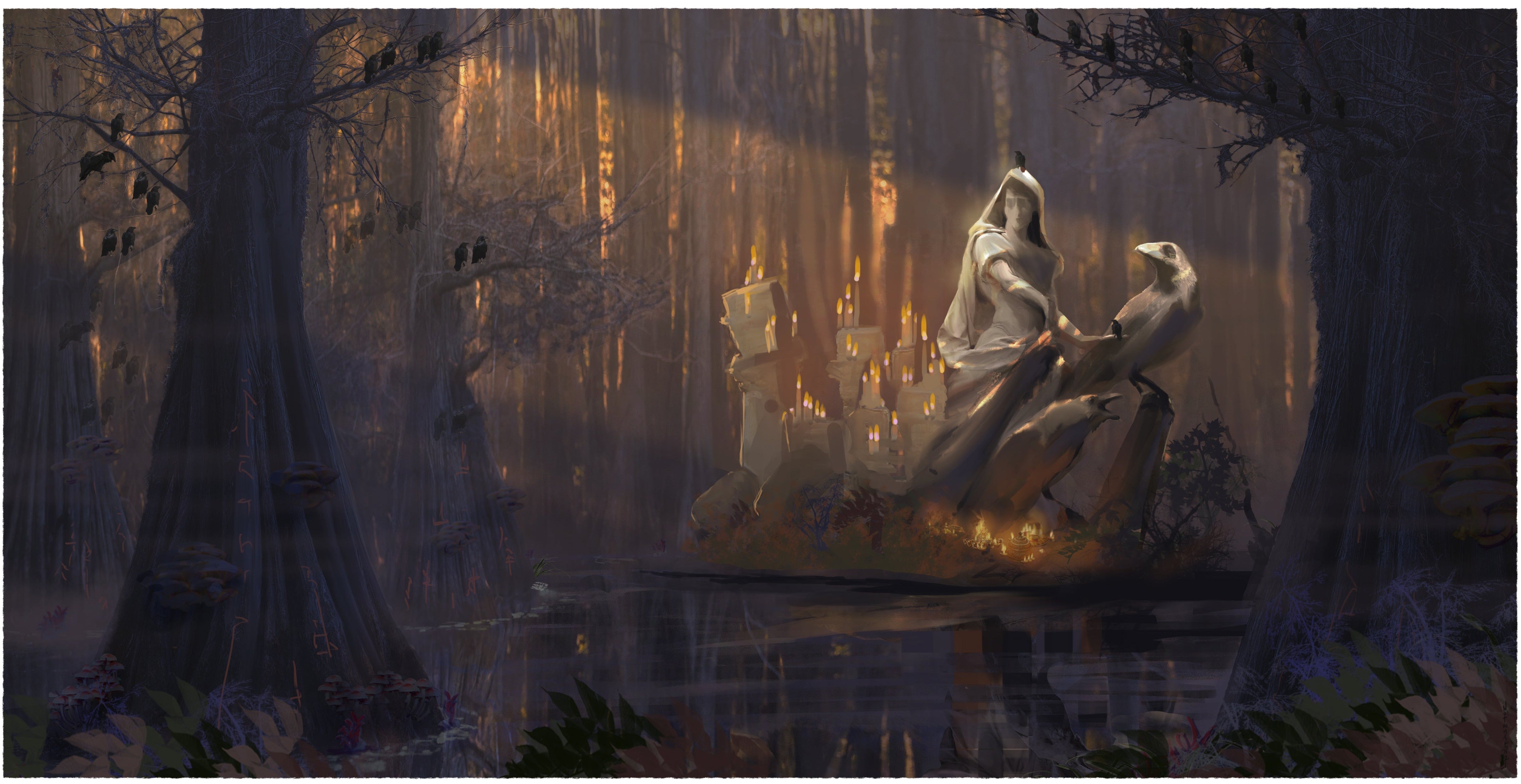
Nocturnal's Shrine
Nocturnal is an artwork celebrating individuality. The serene scenery depicts a shrine erected for what you would assume is humans to praise. However, the forest is undisturbed, and the water still. No one has visited in ages. The candles are still lit, so clearly someone is caring for the site, yet no one is in sight. The only ones showing up for this deity are the crows, who are their en masse.
Not everything has been created for us. Not everything has been created for everyone. Some things are intended to be niche.